IKI High Level Event: Transforming Industry towards Climate Neutrality and a Circular Economy
The industrial sector accounts for around a quarter of global greenhouse gas emissions, making its transformation crucial to achieving the goals of the Paris Agreement. At the same time, decarbonising industry offers significant opportunities to create green jobs and drive sustainable economic growth. But what are the next key steps needed to accelerate this transition?
These questions will be at the heart of the High Level Event hosted by the German International Climate Initiative (IKI). Bringing together high-level representatives from government, international organizations and the private sector, the event will explore pathways towards an industrial transformation based on towards climate-neutral and circular economic models.
The German Federal Minister for the Environment, Carsten Schneider, will open the event with a keynote outlining climate action priorities in Germany and internationally. In his opening statement, Minister Schneider will officially launch the new IKI Large Grants Call 2026, which aims to support partner countries in achieving their climate targets across emission reduction, adaptation, and biodiversity conservation.
The Turkish Presidency of COP31 will highlight the importance of industrial transition through its Action Agenda, which focuses, amongst other priorities, on green industrialization, electrification and the circular economy, setting specific targets for 2035. A key objective is to accelerate global progress towards green industrialisation by increasing the share of circular materials in global production to at least 15 per cent by 2035. The Action Agenda also prioritizes zero waste and methane reduction. In the buildings sector, it calls for a 25 percent reduction in energy intensity, contributing to more resilient and energy-efficient cities. It also sets the ambition of increasing the global electrification to 35 percent.
The following panel will explore all these aspects, with a particular focus on how governments and the private sector can ensure that the transition to climate-friendly industrial production is both socially just and achieved within an ambitious timeframe. Representatives from Türkiye and Thailand will share their experiences and views on the challenges ahead. Experts will discuss key questions such as how to mobilize the necessary funding for the industrial transition and what government support and policy frameworks are needed to incentivize and unlock the required investments.
The participants will also cover what makes circular business models economically viable, what role international cooperation has and what part capacity building and technology transfer plays.
Speakers

Moderator
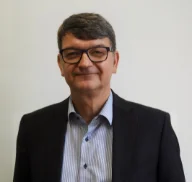
Director-General International Environmental Protection and Climate Action